
Leak Detection in Boulder for Water You Cannot Find
The City of Boulder flags a water bill when the meter recorded water moving for a full 24 hours. If that flag showed up and nobody was filling a tub or running a hose, the water went somewhere: a pipe inside a wall, a line under the yard, or a toilet that never quite stops.
Leak detection finds the exact spot before anyone cuts drywall or digs a lawn, and leak repair follows once the source is known. Call the dispatch line to have a plumber start tracing it.
- Licensed and insured plumbers
- Same-day service when available
- 24/7 emergency dispatch
Did your meter flag water that nobody used?
Start with the number on the meter, because it does not lie. A bill that jumps with no change in habits is the most common way people learn they have a leak, and the quickest test takes ten minutes and a flashlight.
- Make sure nothing is running: dishwasher, washer, ice maker, irrigation timer and humidifier all pause.
- Open the meter lid and look for the small low-flow dial or triangle that spins when any water passes through.
- If it turns while every tap is closed, water is leaving the house plumbing somewhere between the meter and the fixtures.
- Close the main valve inside the house and look again. A dial that stops points to a leak inside the house; a dial that keeps turning points to the line between the meter and the foundation.
That last step matters because it splits one problem into two, with different repairs and different people responsible. A plumber repeats the test with the pipes in sections to narrow it further.
Where a hidden leak shows itself first
Water travels. It follows pipes, joists and gravity, so the damp spot you see is often several feet from the actual leak. The table lists what homeowners notice, where the water is likely coming from, and what a plumber checks before touching a wall.
| What you notice | Likely source | What the plumber checks |
|---|---|---|
| A brown ring that grows on a ceiling | Supply or drain line in the floor above | Runs the upstairs fixture while watching the stain, then pressure tests that branch |
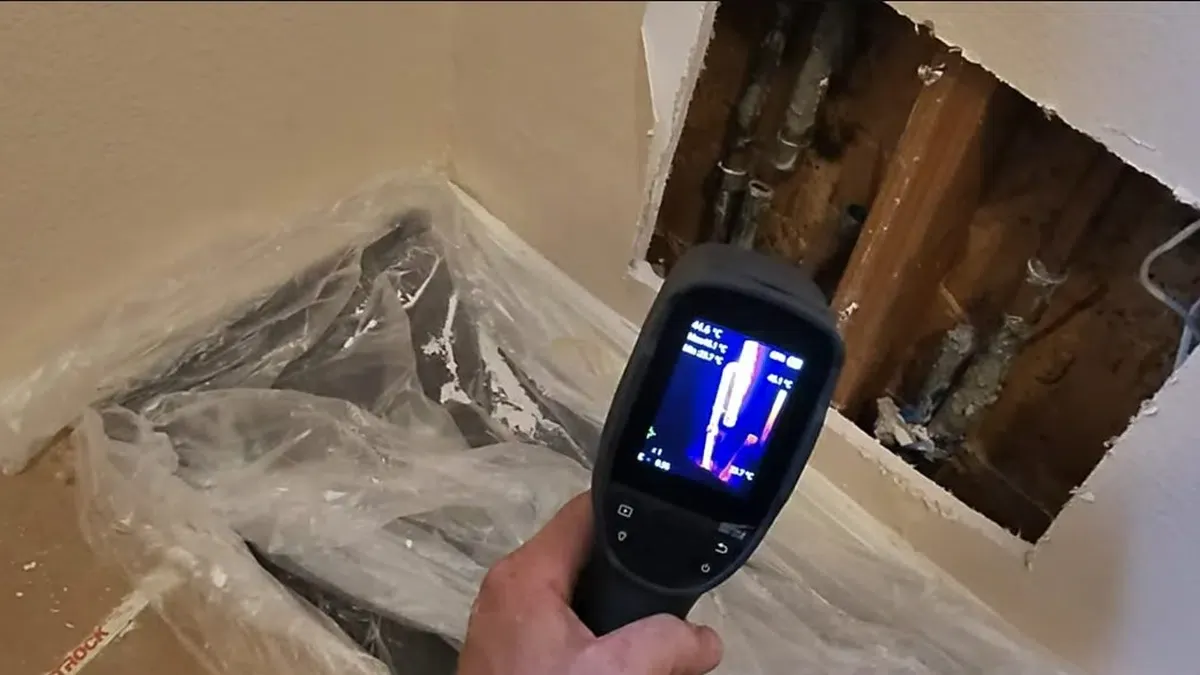
| A wall that feels cool or damp, with peeling paint | Pipe joint or fixture connection inside the wall | Moisture meter and thermal scan to outline the wet area before any cutting |
| A musty smell in a crawl space or utility room | Slow drip at a valve, trap or heater connection | Visual check of every connection, then a dry-paper test on each fitting |
| Warm spots or a hissing sound under a floor | Hot water line under the floor | Acoustic listening along the route, then isolation of the hot side |
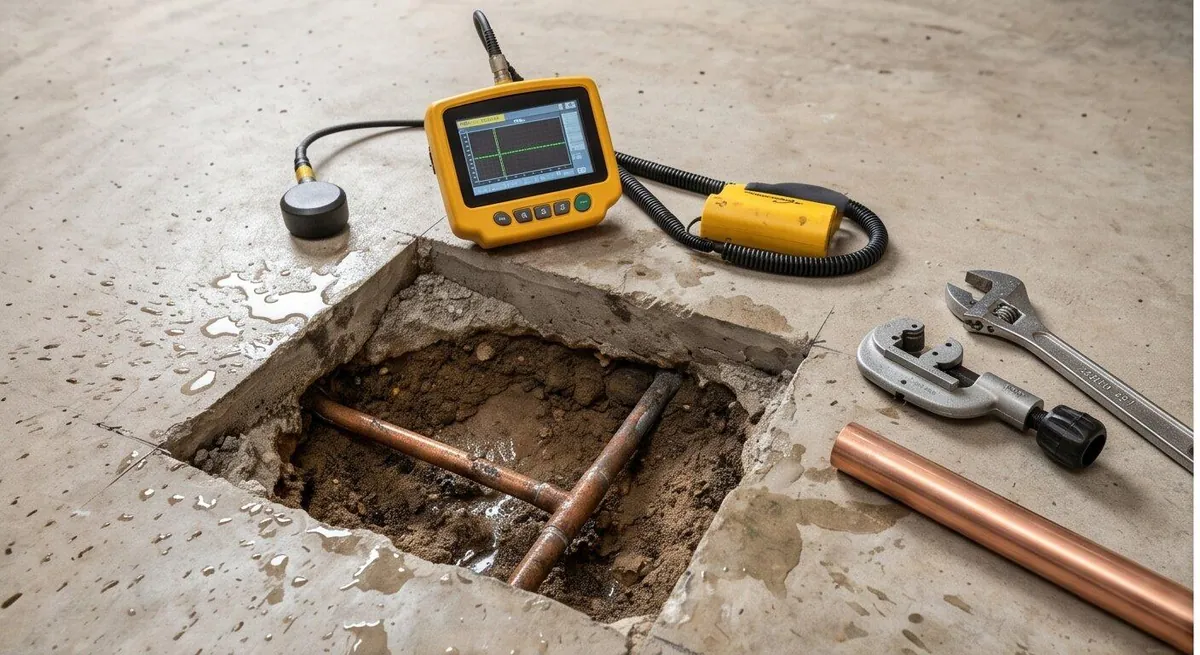
| Soggy ground or lush grass strips in the yard | Irrigation line or buried supply pipe | Meter test with irrigation off, then listening and tracing along the pipe path |
A wall leak and a ceiling leak are cousins, and both are usually a pressurized supply line or a drain that only leaks under load. Fixture leaks at a faucet or toilet are the easy end of the spectrum, and a leak buried under concrete is the hard end, which is why the first visit is about location, not repair.
Attic lines, appliance hoses and water leaking behind walls
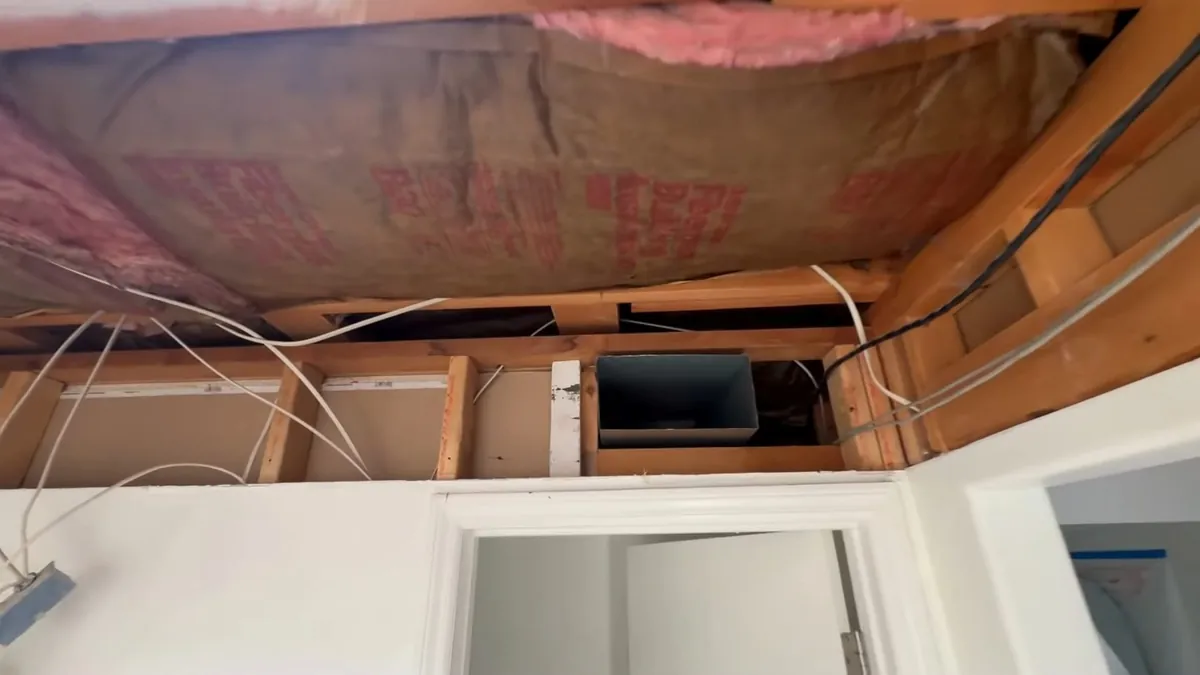
Some leaks never touch a fixture. Water leaking behind walls, a stained ceiling under the attic, or a damp patch around the base of a toilet or water heater each point to a different pipe, and the common signs of a leak are easy to miss until a bill or a stain forces the question.
- Attic plumbing: a vent stack boot, a supply line near the roof deck or a condensate line can drip onto the ceiling below
- Appliance leaks: washing machine hoses, dishwasher supply lines and ice maker tubing fail slowly and out of sight
- Water leaking behind walls: a stained baseboard, bubbling paint or a musty smell near a bathroom wall
- Leaking around the base: a toilet seal, tub drain or water heater fitting weeping into the floor
Catch small leaks early and the repair stays small. Left alone, prolonged leaks soften framing and feed mold, so the warning signs of hidden leaks deserve a call before the stain spreads. Photograph the spot, note the date, and tell the dispatcher what changed.
Water spreading where it should not? Call now
Tell the dispatcher where you see the damp and whether the meter is still turning, and a plumber serving your area can start tracing it.
☎ Call (303) 567-7524How a plumber finds a leak without opening every wall
The goal of the visit is a marked spot on the surface, so the opening is the size of a hand and not the size of a room. A pipe condition check comes first, because the age and material of the pipe decide what a repair will look like.
- Walk the house with you and read the meter, noting which fixtures and rooms show symptoms.
- Isolate sections of pipe with valves and pressure test each one, so the leaking branch announces itself.
- Listen with electronic or acoustic equipment along the likely route, since escaping water has a sound pipes make.
- Confirm with a thermal scan or moisture meter, then mark the spot and explain the repair before any cutting.
Pressure and hydrostatic testing deserve a word. The plumber caps a section of pipe, raises the pressure with the supply or a test gauge, and watches for a drop. A gauge that holds steady clears that section, which is as useful as finding a leak because it narrows the search. Inspection also covers the condition of the pipe itself: green crusting on copper, flaking on old galvanized steel, or pinhole sprays suggest the run is wearing out and one repair may be followed by another.
Fixture leaks to rule out before anything else
Many high bills trace back to something small. A toilet that refills on its own, a faucet that weeps at the base and a showerhead that never fully seals each waste water without leaving a puddle. Rule these out first, since each is quick to test and quick to fix.
- Toilet dye test: add a few drops of food coloring to the tank, wait twenty minutes without flushing, and look for color in the bowl.
- Faucets and angle stops: dry them with a paper towel, then check for a damp tissue after an hour.
- Outdoor spigot and hose bib: look for water at the base of the wall or a drip with the hose disconnected.
- Water softener, humidifier and ice maker lines: trace each supply tube for beads of moisture.
If a fixture is the culprit, the repair belongs on the fixture repairs page, and the plumber can do it during the same visit. If every fixture is dry and the meter still turns, the leak is in a hidden run of pipe.
Should the leaking pipe be repaired or the run replaced?
A single failed joint on a sound pipe is a repair. The answer changes when the pipe itself is the problem. Ask the plumber what the pipe is made of, how many leaks the same run has had, and whether the surrounding sections show corrosion. A patch every spring is a sign to price a full replacement of that run, which the repiping page explains in detail.
For a leak between the street and the house, the repair sits on the buried supply line and follows the process on the water line repair page. Ask for the repair to be described in plain terms before work starts: where the opening will be, how the pipe will be joined, and how the wall or yard will be left.
Basement, crawl space and yard leaks
Below-grade spaces collect water from two directions: plumbing above and the ground outside. Telling them apart saves a wasted repair. A leak from plumbing usually shows up along a pipe route and follows the meter test. Water that appears after heavy rain or snowmelt, along the base of a wall or the floor edge, is more likely groundwater.
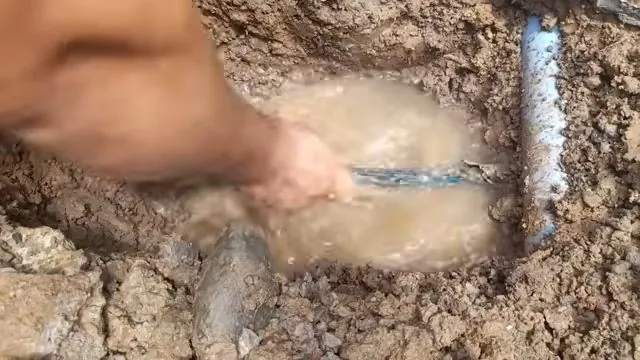
In the yard, a buried irrigation line or the house supply can leak for weeks without a puddle if the soil drains quickly. Look for a patch of grass that stays greener than the rest or a soft spot that does not dry. If the leak is in a basement floor, the leaks under concrete page covers leaks under concrete, and sump and floor drain questions go to drain cleaning.
Meter still turning with every tap closed?
Call, describe the symptoms and the dispatcher will line up a plumber from the licensed and insured network.
☎ Call (303) 567-7524Leak questions Boulder homeowners ask
Why does a leak keep coming back after the stain is painted over?
Paint hides the mark but not the source. A homeowner patches a brown ring on a bathroom ceiling, and three weeks later the ring is back and bigger. That usually means the supply line or drain above is still wet, or a joint is seeping only when the upstairs shower runs. A plumber runs the fixture above while watching the damaged area, then tests the line under pressure to find the joint that weeps. Repair the source first, let the cavity dry, and only then refinish the surface.
What can wait and what cannot when a pipe is leaking downstairs?
Close the main shutoff or the fixture valve first, because moving water does not wait. Once the flow is stopped, what can wait a few hours is the cleanup of dry items and the call to your insurer. What cannot wait is wet drywall touching electrical outlets, a ceiling that is bulging with trapped water, or anything near a panel. Stay out from under a sagging ceiling, photograph the damage, and call the dispatch line so the source gets traced and the line repaired.
Water is pooling in the parking lot of our apartment complex. Who finds the leak?
Pooling on pavement points to a buried line, either the irrigation system or a domestic line between the meter and the buildings. The property manager or owner is responsible for pipes on private property, while the water utility handles its own main and meter. A plumber can isolate the private side by shutting valves in sequence, then listen along the pipe route to pin the spot. Call before anyone digs so the utility locate happens first.
A pipe froze and now it is leaking. Do I thaw it or call someone?
There are two paths. If the pipe is exposed and not yet split, shut the water off and warm it slowly with a hair dryer on low, never a flame. If you already see a drip, a bulge or frost on a section inside a wall, do not thaw it yourself: the ice may be plugging a split that will pour water once it melts. Shut the main, open a faucet downstream and call for a plumber to open and repair the damaged section.
Where a leak leads next
A leak that has already soaked a floor or wall may need drying and cleanup, which the drying and cleanup page describes. Questions about a pipe that is past repair go to pipe repair and repiping, and a heater tank that leaks at the base is covered under water heater repair.
Leak suspected? Get a plumber on the line
A running leak does more damage every hour. Call, and a plumber serving your area can trace the source.
☎ Call (303) 567-7524- Licensed and insured plumbers
- Same-day service when available
- 24/7 emergency dispatch